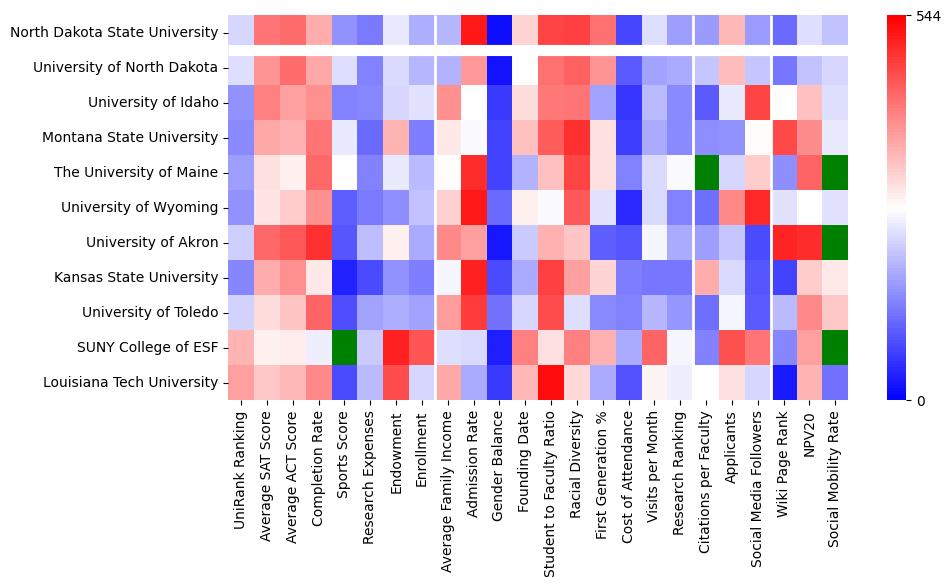
North Dakota State University (NDSU), located in Fargo, was founded in 1890 as the North Dakota Agricultural College. Over the decades, it has evolved from its agricultural roots into a comprehensive research university, becoming part of the North Dakota University System. Today, NDSU is recognized as a land-grant, research-intensive institution, serving over 13,000 students and offering a wide array of undergraduate and graduate programs. The university is situated in Fargo, the largest city in North Dakota, providing students with a unique blend of urban amenities and a close-knit community atmosphere.
NDSU stands out for its strong emphasis on research and innovation, particularly in fields related to agriculture, engineering, and health sciences. The university's commitment to research is reflected in its Carnegie Classification as an R2: Doctoral University – High research activity. NDSU is home to several research centers, including the Upper Great Plains Transportation Institute and the Center for Nanoscale Science and Engineering, fostering a culture of interdisciplinary collaboration. Moreover, the university's location in a thriving economic hub offers students ample opportunities for internships and employment in various industries.
Academically, NDSU is well-regarded, with programs in agriculture, engineering, and pharmacy standing out as some of its strongest offerings. The College of Engineering, in particular, is known for its focus on practical, hands-on learning experiences, preparing students for successful careers in a variety of engineering fields. NDSU's College of Agriculture, Food Systems, and Natural Resources is another highlight, benefiting from the university's origins and continued emphasis on agricultural research and education. Additionally, the School of Pharmacy is renowned for its comprehensive curriculum and strong industry connections, consistently producing graduates who excel in their field.
While NDSU has many strengths, it faces challenges typical of public universities, such as fluctuating state funding and large class sizes in some introductory courses. Additionally, the harsh winters in Fargo can be a drawback for students unaccustomed to cold climates, potentially impacting campus life and activities. Despite these challenges, the university's dedication to providing quality education and fostering a supportive community helps mitigate some of these issues, ensuring that students receive a well-rounded college experience.